
Key Facts About Your Baby's Passport Photo
- Best timing: Just after a nap and feed, when your baby is awake and settled
- UK requirements: 45mm x 35mm, plain cream or light-grey background, eyes open (under-1s exempt), no dummies or toys
- Recommended approach: Professional photographer (£12–£20) rather than a photo booth for babies under 6 months
- Forbidden items: Dummies, headbands, hats, and no visible supporting hands in the final shot
- Pro tip: Use a sound-making toy held just beside the camera lens to get your baby to look in the right direction
Need to get a passport photo for your little one and not sure where to start? You're not alone! Between eyes that keep closing, unexpected crying fits, and the need to meet HM Passport Office requirements exactly, it can feel like a real challenge.
Having worked with hundreds of tiny babies over the years, I've put together this complete guide to help you turn this administrative task into a calm and successful experience. Because yes, even an official document can result in a lovely little keepsake of your baby at this precious age!
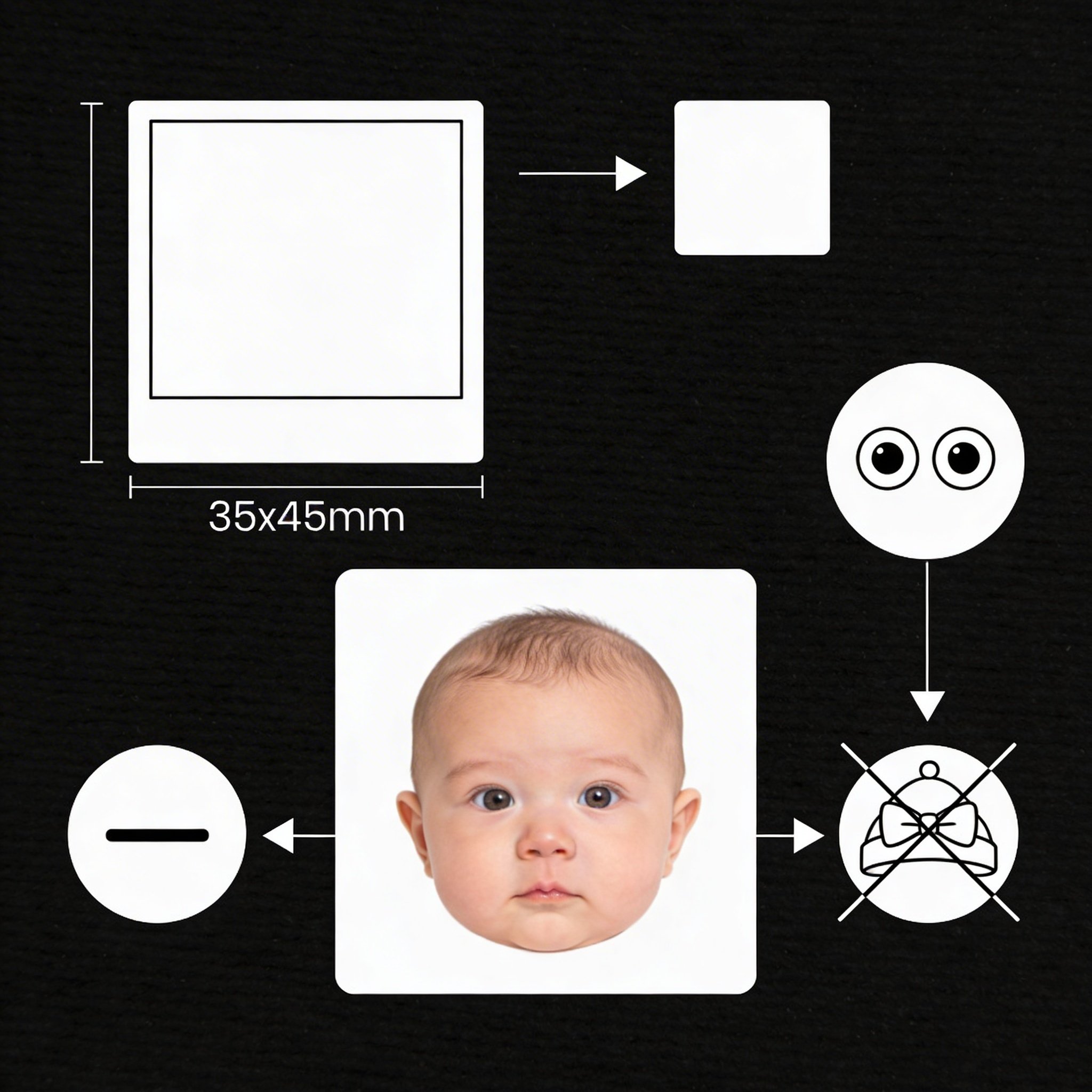
Official UK Passport Photo Requirements for Your Baby
Before anything else, let's cover the rules. UK passport photo requirements are strict, and they apply to your little one too. HM Passport Office sets out precise criteria that your photo must meet without exception.
Good news for parents of young babies: the UK rules include some important relaxations for children under 6, and especially for babies under 1 year old. These make the process significantly more manageable, though the technical requirements on size and background remain non-negotiable.
Format and Dimensions: The Exact Measurements
According to GOV.UK official passport photo guidance, the photo must measure 45mm high by 35mm wide. Your baby's face, from chin to crown, must measure between 29mm and 34mm, meaning the face occupies approximately 70–80% of the photo height. This precision is exactly why a professional photographer who knows these specifications is well worth the cost.
The Background: Plain Cream or Light Grey
Here is a critical detail that trips up many parents: the background must be plain cream or light grey. A pure white background is actually not ideal, it can cause contrast issues, particularly with your baby's fair skin. Make sure your background is clearly cream or light grey, not white.
Expression and Face Position
For adults, a neutral expression with mouth closed is required. For babies, UK rules are considerably more flexible:
- Under 1 year old: Eyes do not need to be open
- Under 6 years old: Children do not need to look directly at the camera or have a plain expression
- All ages: Nothing must cover the outline of eyes, nose, or mouth
This is genuinely reassuring for parents, but you should still aim for eyes open if possible, as it makes for a clearer and more recognisable photo that will serve your child better over the passport's validity period.
| Criterion | UK Requirement | Baby Allowance |
|---|---|---|
| Format | 45mm x 35mm | None, exact size required |
| Background | Plain cream or light grey | None, applies to all ages |
| Eyes | Open and clearly visible | Under-1s: eyes may be closed |
| Expression | Plain, mouth closed | Under-6s: natural expression accepted |
| Camera direction | Looking straight ahead | Under-6s: no direct gaze required |
| Sharpness | Clear, in focus, no shadows | None |
| Recency | Taken within the last month | None |
Strictly Forbidden Items
Your baby cannot have a dummy, headband, hat, or any hair accessory visible in the photo. Ears and forehead should be clearly visible. Most importantly: no supporting hands may be visible in the final image. This is the single hardest requirement to meet with very young babies who cannot yet sit unaided, but a professional photographer has the equipment to solve this.
How to Prepare Your Baby for a Successful Passport Photo
Preparation accounts for 80% of the outcome! After working with hundreds of babies, I can tell you that timing and organisation make all the difference.
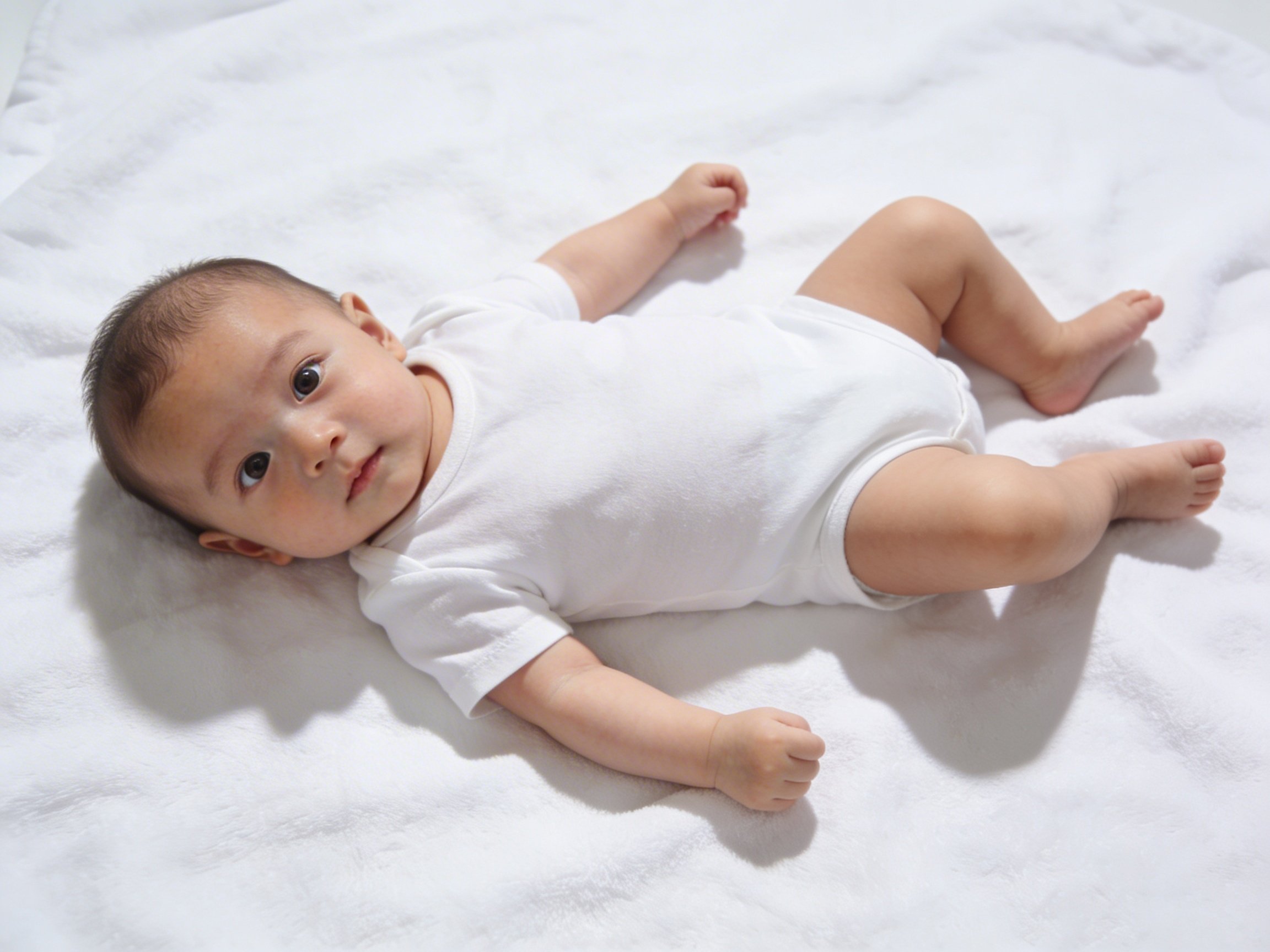
Perfect Timing: Right After a Nap and a Feed
Schedule the photo session 30 minutes to 1 hour after a feed, when your baby has eaten well but hasn't fallen asleep yet. This is the golden window, your baby is awake, calm, and most cooperative. Avoid the stretch just before a nap: you risk a grumpy baby with eyes constantly drooping.
The Ideal Outfit
Choose a coloured bodysuit or top (avoid white, which blends into the light background). The neckline should be clear, without large patterns that draw the eye away from the face. Straps can sometimes be flagged by photographers, so plain tops with a visible neckline are safest.
Also think about hair: forehead and ears should be clearly visible. If your baby girl has longer hair, tie it back simply with no visible accessory at the front.
What to Pack in Your Changing Bag
Bring along:
- A small bottle of water (avoid milk just beforehand, it may send your baby to sleep)
- A dummy or comfort toy to settle between attempts (remove it for the actual photo)
- A spare outfit in case of any accidents
- A sound-making or light-up toy to attract attention towards the lens
- A small blanket if you need to lay your baby flat (useful for newborns)
If you're looking for a photographer who truly understands what your baby needs for this kind of session, browse our directory of specialist baby photographers who have plenty of experience with newborns and young infants.
Professional Photographer or Photo Booth: Which Should You Choose?
This is the question every parent asks! The right answer depends on your baby's age and whether they can sit independently.
The Professional Photographer: The Recommended Solution for Under-6-Month-Olds
For newborns or babies who cannot yet sit up, a professional photographer is clearly the best option. Why? Because they have equipment specifically designed for babies:
- A baby support seat or support chair to hold your baby in a semi-upright position
- A specialist flat surface for newborns lying on their backs
- Soft, diffused lighting without direct flash (which is not recommended for babies)
- Above all: the patience and experience to wait for exactly the right moment
Sessions typically last between 5 and 30 minutes depending on your baby's mood. A professional photographer will take multiple attempts until they capture the compliant shot, adapting entirely to your baby's pace and needs.
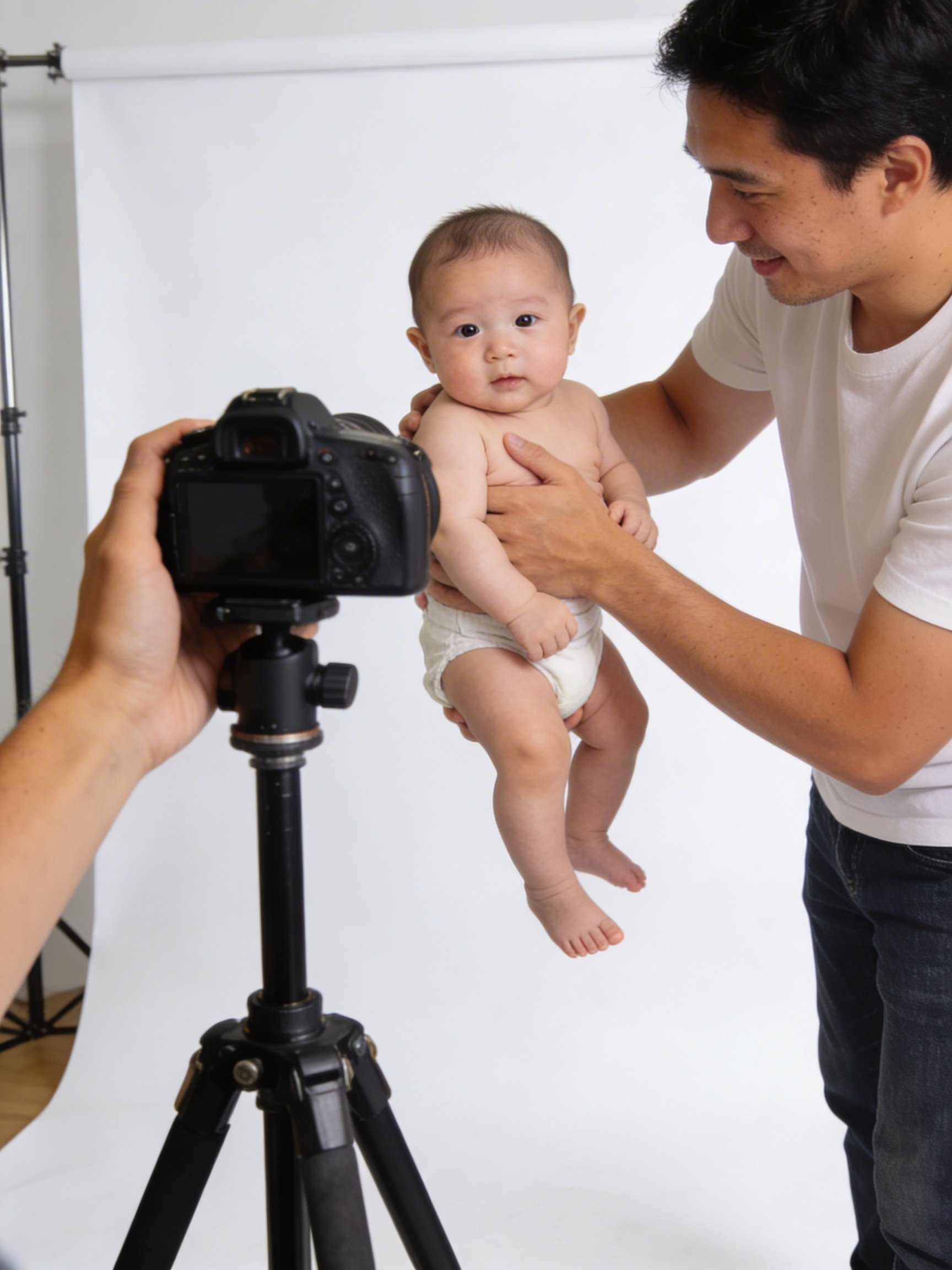
High-Street Photo Booths: Possible After 6 Months, But Risky
If your baby can sit stably on their own, a photo booth becomes feasible. However, many photos taken in booths with babies are rejected. Common reasons include:
- Supporting hands becoming visible in the frame
- Baby moves at the moment the shutter fires
- Eyes close in response to the flash
- You only get a limited number of attempts, very stressful!
Retailers such as Timpson and Max Spielmann offer in-store passport photo services specifically designed for babies and young children, where a staff member takes the photo with the right equipment. This is far safer than a self-service booth for babies.
The Growing Alternative: App + Professional Check
Some services let you take the photo at home with your smartphone, then upload it for validation and printing to the correct specification. The advantage is unlimited attempts in the comfort of your own home.
Home technique: lay your baby on a plain, light-coloured blanket, position yourself directly above with your phone level with their face, and photograph using natural window light. The service then crops and prints to UK passport dimensions.
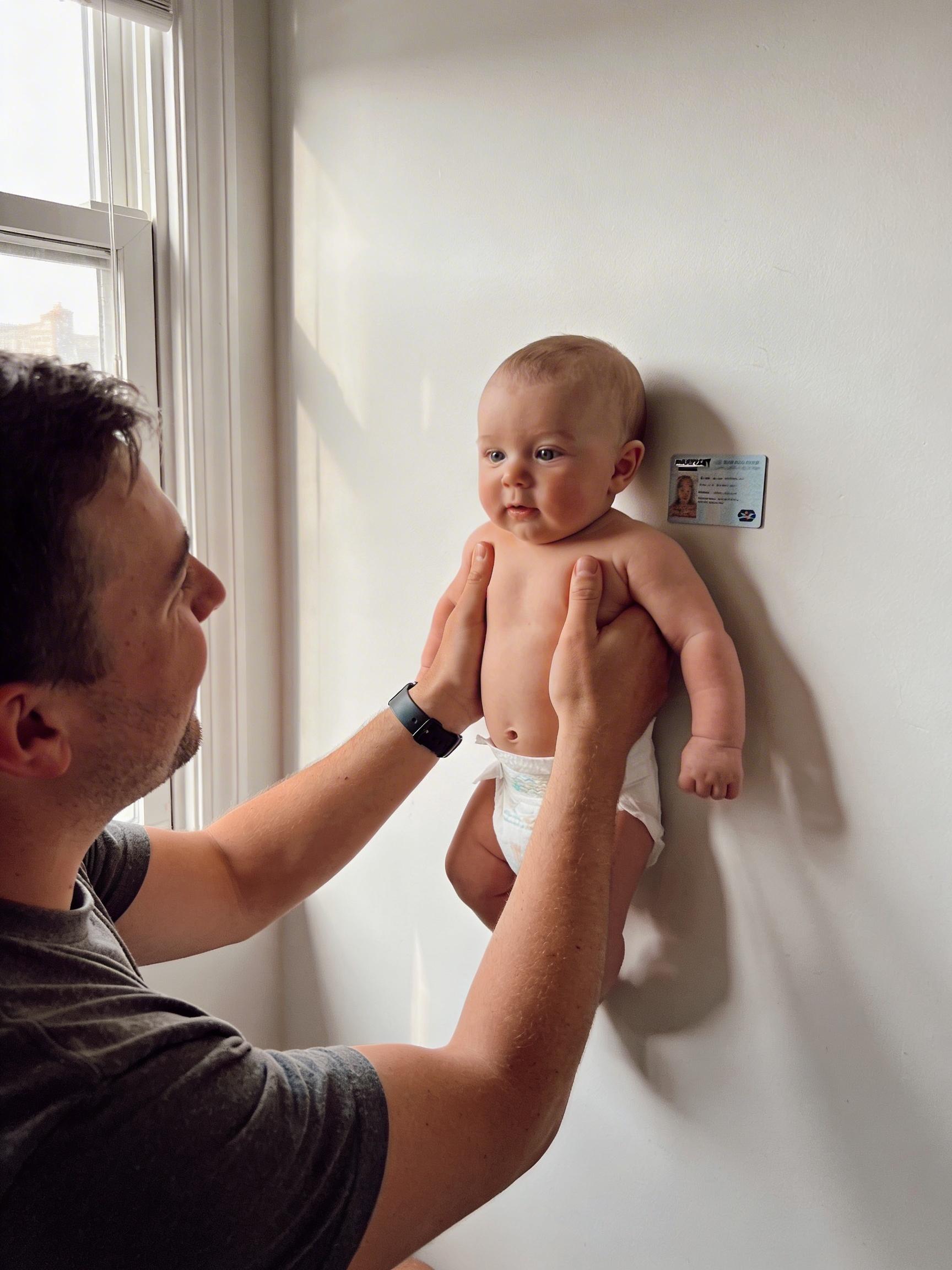
Tried-and-Tested Techniques for Eyes Open and Looking at the Camera
Here are my professional tips, tested across hundreds of babies! Getting your baby awake AND looking in the right direction is the number one challenge in passport photography.
The Sound Toy Technique
Place a sound-making or light-up toy right beside the lens (or ask your photographer to do this). Your baby will naturally turn towards the source of the noise. Stick to gentle sounds like a rattle or soft squeaker, loud or shrill toys risk startling your baby into tears.
The "Gentle Wake" Method for Newborns
For babies who tend to drift off: gently stroke their feet or hands, and speak softly to them. Avoid sudden movements that might make them cry. The aim is to maintain a light state of alertness, just enough for eyes to stay open for 2–3 seconds.
The Soft Light Trick
If the shoot is done under natural light (near a window), your baby will find it much easier to keep their eyes open than under direct flash. A professional photographer uses reflectors and diffused lighting to create the ideal conditions.
Timing the Alert Phase
Watch your baby's natural rhythms: most babies have predictable periods when they are naturally awake and alert. For many, this is mid-morning between 9am and 11am, or mid-afternoon around 3–4pm. Book your appointment during one of these windows.
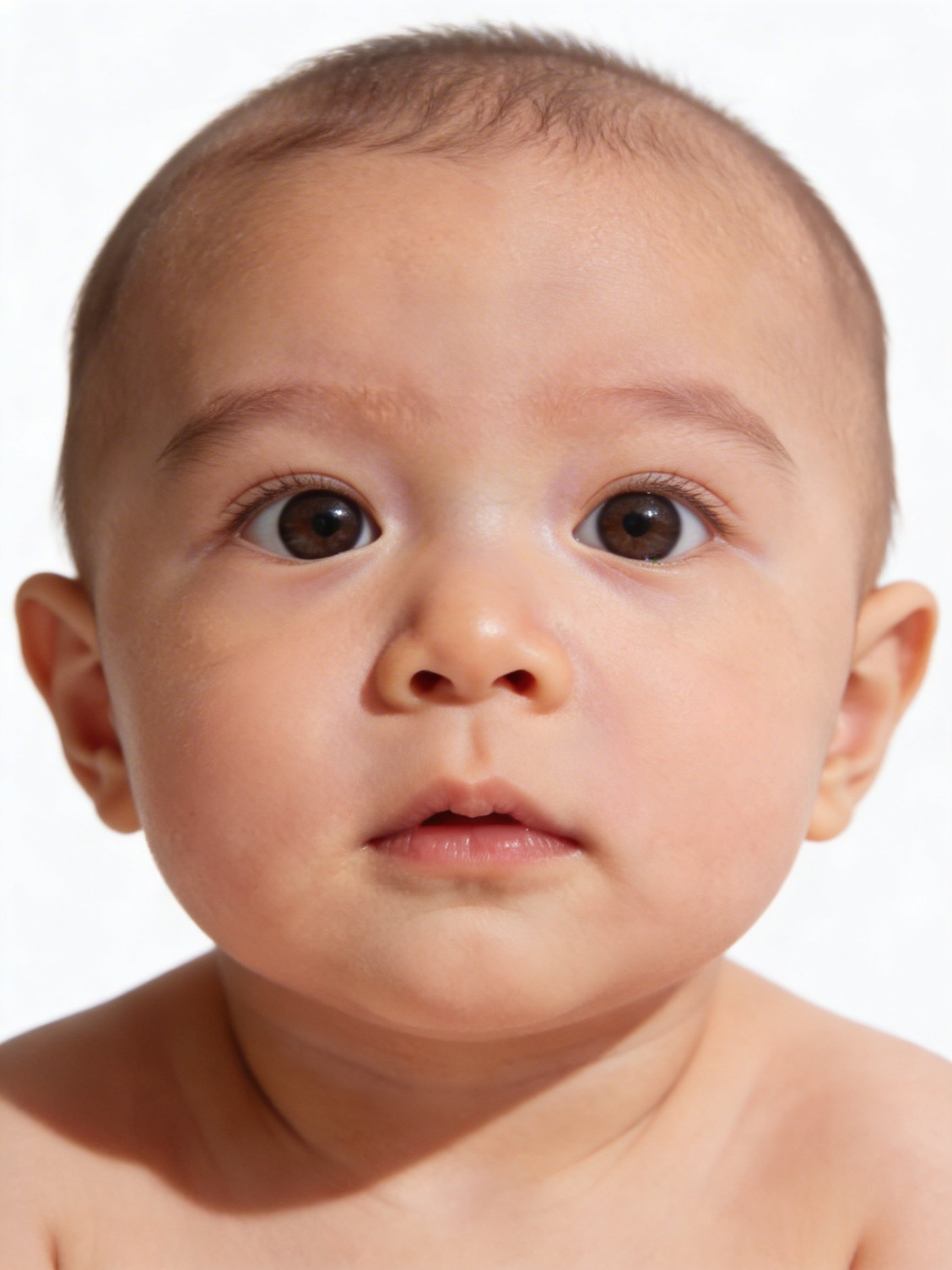
Practical Guide by Age Group: Adapting the Session to Your Baby
Every age brings its own considerations. Here's how to approach the photo depending on where your baby is in their development.
0 to 2 Months: The "Lying on Their Back" Technique
At this stage, your baby cannot hold their head up. The best method is to lay them on a plain, light-coloured blanket and photograph from above. The photographer positions themselves overhead with the camera level with your baby's face. This is precisely why a professional with a suitable flat surface is strongly recommended.
Allow 15–30 minutes for the session, you'll need to wait for alert phases.
3 to 6 Months: A baby support seat or Bouncer Chair Becomes Possible
Once your baby is starting to hold their head up, a photographer can use a baby support seat support chair to keep them in a semi-upright position with no hands visible. Some photographers also use a specially designed bouncer for this purpose. This is arguably the ideal age for a passport photo session!
A note: this is also the age of first smiles. A gentle smile is not a problem, as long as the mouth is not wide open. A natural, soft expression is perfectly acceptable for babies in the UK.
6 Months and Over: Sitting Independently
From around 6–7 months, your baby can sit stably without support. This is the point at which a photo booth becomes technically possible (though I still recommend a professional photographer for a more relaxed experience). You can sit your baby on your lap and remain hidden behind them.
Bear in mind: at this age, babies move much more! You really need to capture their attention with a sound toy to get 2–3 seconds of stillness.
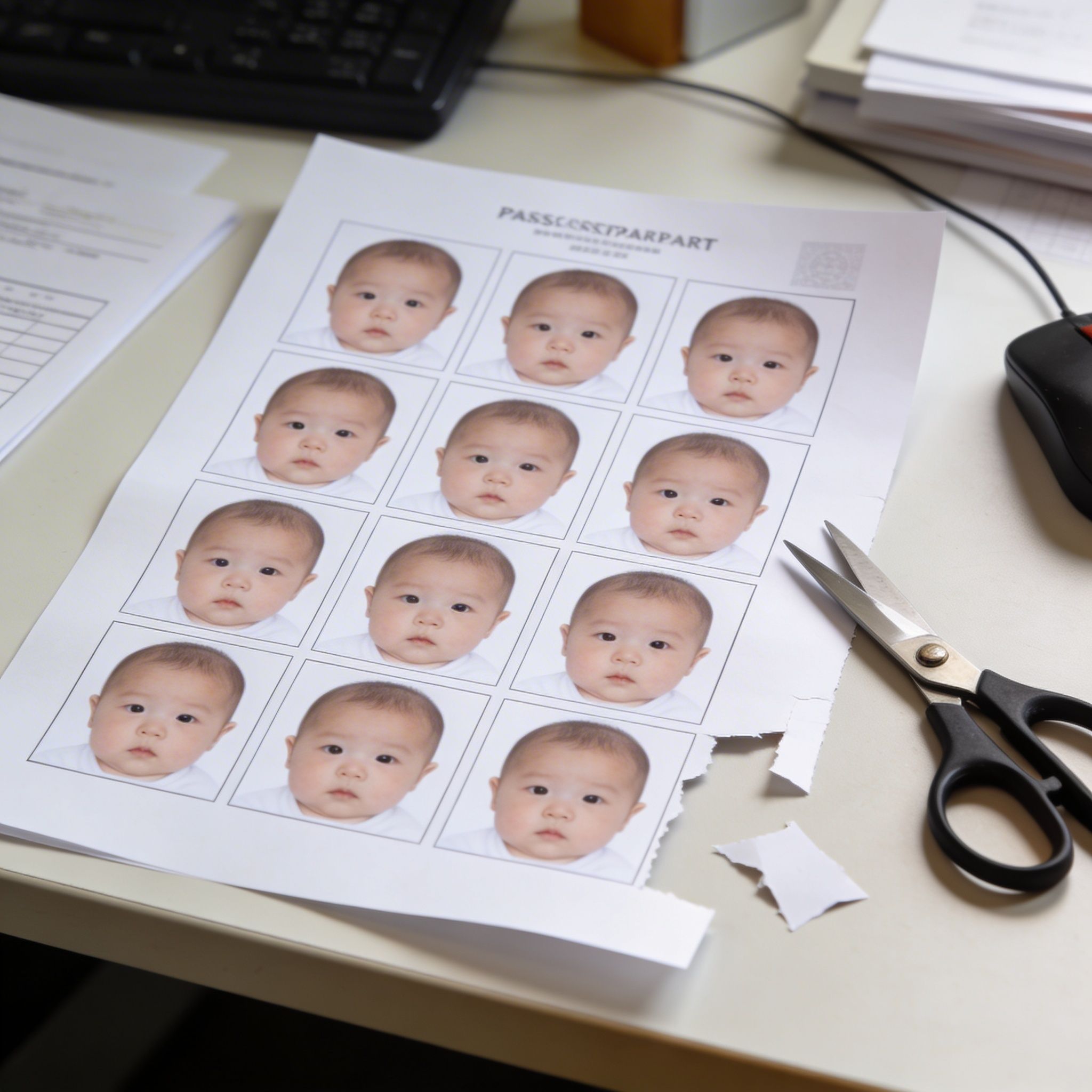
The 5 Mistakes That Get Your Baby Passport Photo Rejected
Let's look at the traps to avoid. These mistakes are responsible for the vast majority of passport photo rejections.
Mistake 1: The Wrong Background Colour
The background must be plain cream or light grey, not pure white, not patterned, not coloured. If you take the photo yourself at home, use a plain cream or grey blanket or sheet. A white background can cause contrast issues and may lead to rejection.
Mistake 2: Visible Supporting Hands
When you support your baby, your fingers or hands must NOT appear in the final image. This is why the baby support seat and the lying-flat technique are so valuable, they allow you to support your baby without being visible in frame.
Mistake 3: Eyes Closed or Half-Open
While babies under 1 are officially exempt from the eyes-open requirement, in practice a photo where your baby's eyes are partially closed can look unclear and unhelpful over the life of the passport. Aim for eyes open where you can, it makes for a much better document photo.
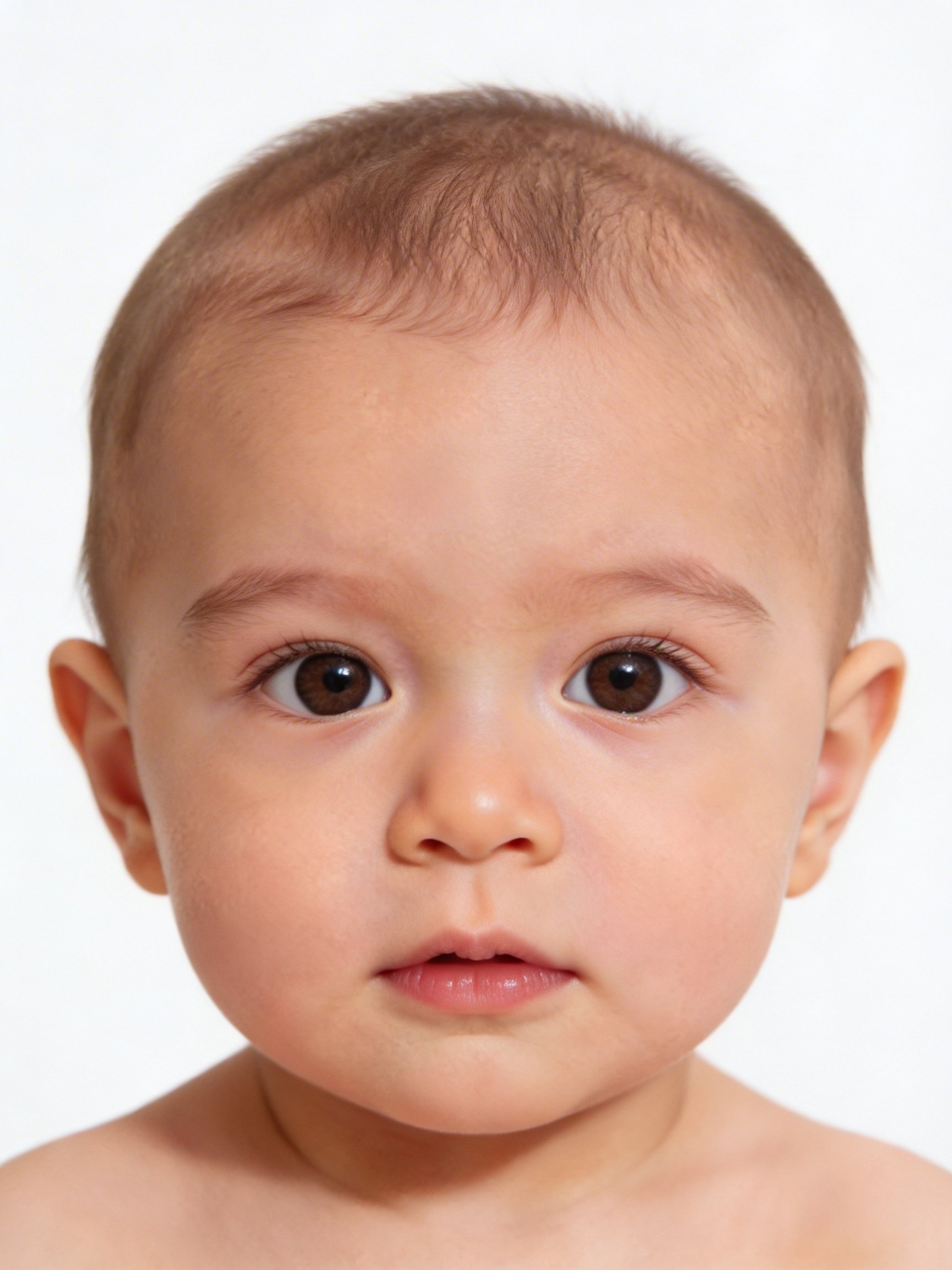
Mistake 4: The Forgotten Dummy
It happens more often than you might think: in the stress of the session, the dummy gets left in. Make sure you remove it before every single attempt. The same applies to anything else in your baby's mouth.
Mistake 5: A Photo Taken More Than a Month Ago
The UK requirement is clear: the photo must have been taken within the last month. Given how quickly babies change, do not attempt to reuse an older photo even if it "still looks like them"it will be rejected.
How Much Does a Baby Passport Photo Cost in the UK in 2026?
Let's talk costs. Prices vary depending on the solution you choose and where you are in the country.
| Option | Typical Price | Number of Photos | Best For |
|---|---|---|---|
| Timpson in-store service | from £12.99 | Multiple prints | All ages incl. newborns |
| Max Spielmann in-store service | from £12.99 | Multiple prints | All ages incl. newborns |
| Independent baby photographer | £15–£25 | 4–10 photos | 0–6 months especially |
| High-street photo booth | £6–£8 | 6 photos | 6 months+ (sitting unaided) |
| App + online print service | £5–£10 | Variable | All ages (DIY at home) |
| Home visit photographer | Variable (on request) | 10–15 photos | Twins, premature or fragile babies |
Across cities like London, Manchester, Birmingham, and Leeds, you'll find professional photographers and high-street services that offer compliant baby passport photos for between £12 and £20. It's a worthwhile spend to avoid repeat trips and rejections. With around 594,677 babies born in England and Wales in 2024 (source: ONS, 2024), demand for baby passport photos remains very high. To find a professional near you, browse photographers in London, Manchester, Birmingham, or Leeds. For a full overview of baby photography session costs, see our 2026 UK baby photographer price guide.
Worth knowing: under Citizens Advice consumer guidance, you are entitled to request a clear written quote before any paid service. A photographer should clearly state the total price including VAT, a description of what is included, and how long the quote is valid.
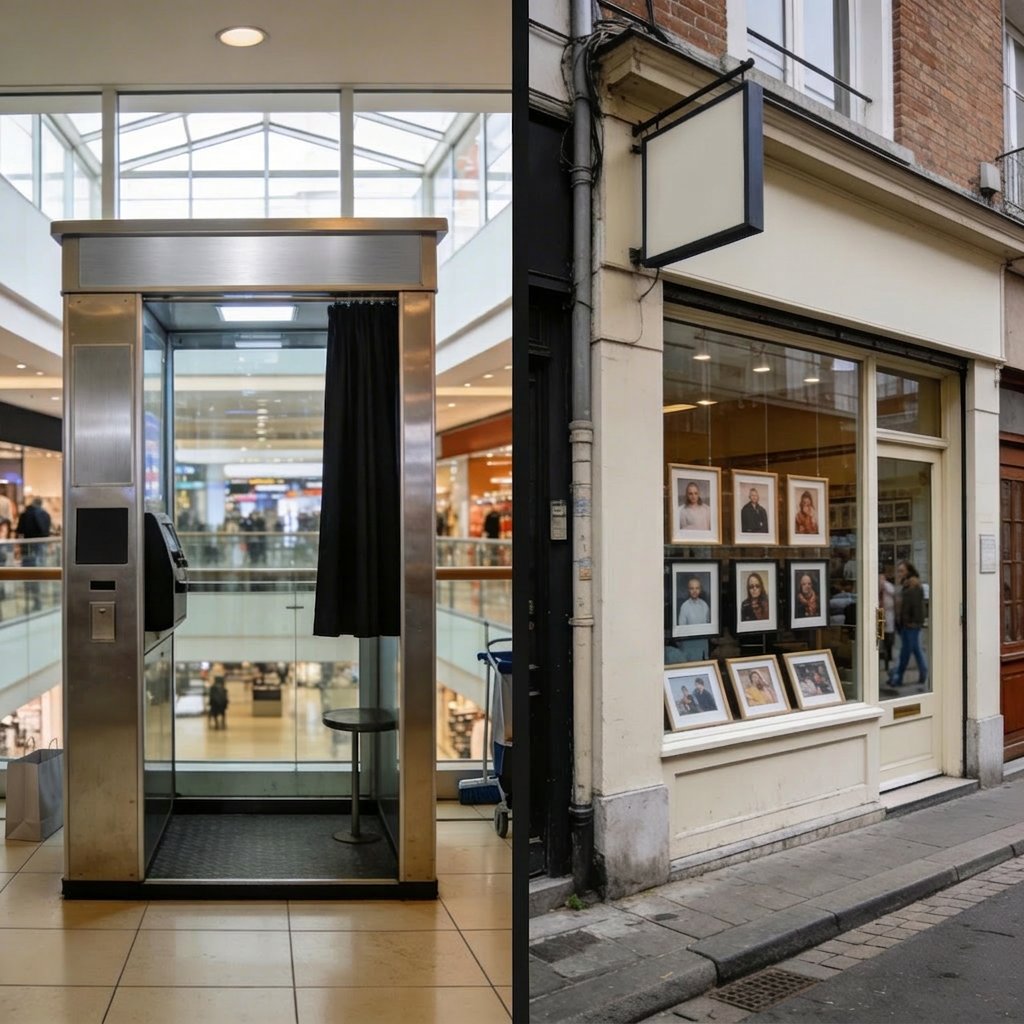
Your Most Frequently Asked Questions About Baby Passport Photos
From what age can a baby have a passport photo taken?
From birth! There is no minimum age in the UK. For a first passport, it's best to wait a few days until your newborn has settled into a more regular pattern. The ideal window tends to be around 10 days to 3 months, babies still sleep a lot, but they have predictable alert phases that a skilled photographer can use.
How do you position a baby for a passport photo?
Three techniques depending on age: for a newborn, lying on their back on a plain light blanket. Between 2 and 6 months, in a baby support seat support chair that holds their back upright. After 6 months, sitting on your lap with you hidden behind them. In every case, your hands must NOT be visible in the final photo.
Can you take your baby's passport photo yourself at home?
Yes, it is legally permitted. But getting the background exactly right (cream or light grey), the framing correct, the face measurement within the 29–34mm range, and the lighting shadow-free is genuinely difficult without professional equipment. If you try at home, use a specialist app that validates compliance before you print, it will save you a wasted trip to the passport office. For most parents, a professional photographer at £12–£15 is the simpler, more reliable option.
What if my baby's eyes are closed in the photo?
For babies under 1, closed eyes are officially permitted under UK rules. However, it's still worth trying to capture the eyes open, it makes for a clearer photograph that will work better as an ID document over time. Useful techniques: schedule the session during an alert phase, use a gentle sound toy to attract attention, and softly stroke your baby's feet to keep them from drifting off. An experienced photographer will be patient and take as many attempts as needed without stressing your baby.
Are dummies allowed in a passport photo?
Absolutely not, the HM Passport Office guidelines are explicit: babies must not be using dummies in their passport photo. You can use the dummy to settle your baby between attempts, just make sure it's removed for each shot. Have a toy or other distraction ready so your baby doesn't cry once it comes out.
Are supporting hands allowed in the photo?
No, supporting hands must not appear in the final image. This is one of the main reasons for rejection. If you need to support your baby (particularly for very young infants), the photographer must frame the shot so that your hands remain entirely outside the picture, or use specialist equipment like a baby support seat that supports your baby without any visible assistance.
Where can I get a baby passport photo in London, Manchester, or elsewhere in the UK?
You have several options: professional in-store services at retailers such as Timpson and Max Spielmann (recommended for babies who can't sit unaided), high-street photo booths for older babies who sit independently, or local baby photographers who offer this as a standalone service. In major cities like London, Manchester, Birmingham, Bristol, Leeds, and Liverpool, there are specialists who provide this service at competitive rates. Find a trusted local professional in our baby photographer directory to avoid rejected photos and unnecessary repeat trips.
Turn This Admin Task Into a Memory Worth Keeping
There you have it, everything you need to get your baby's passport photo right first time. Yes, it's an official document, but it's also a tiny snapshot of your baby at this exact age. In a few years, you'll look at that photo with a smile and think "they were so small!"
My final advice: don't put pressure on yourself. If the first session doesn't go to plan because your baby is crying or sleepy, that's completely fine. You'll try again another day. This is exactly why I always recommend a professional photographer, they understand that your baby sets the pace, and they'll adapt with patience and experience.
And most importantly, enjoy the process. Even for a straightforward passport photo, you're creating a moment with your baby. Your story is being written, one photo at a time.
If you'd like to go further and give your baby a beautiful artistic photo session alongside their passport photo, explore our age-by-age guides to find the right type of session for your baby's stage. Every milestone in that first year deserves its own memories.
Find Your Baby Photographer Across the UK
Compare portfolios, pricing, and reviews from carefully selected baby photographers across England, Scotland, and Wales.
View All Photographers →
