
Key facts about birth photos at hospital
- The first hours are unique: your baby will never be this tiny, this curled, these moments cannot be recaptured
- Birth photographer in the delivery room: possible in some UK hospitals, but only with prior agreement from the medical team, check well in advance
- Hospital photographer vs independent photographer: the hospital's own service is convenient, but an independent photographer offers more personalisation and pricing transparency
- Prices: from around £80 to £500+ depending on the option (hospital service vs independent photographer), often without prints included in the base price
- You can also do it yourself: a few simple settings and knowing which moments to target make all the difference
Your baby has just been born. Or perhaps they'll arrive in a few weeks and you're already thinking about those very first hours, that smell, those tiny fingers, that first look. An overwhelming urge to capture everything. Birth photos at hospital are exactly that: a window onto a moment that will never come again.
This guide will help you understand all your options, a professional birth photographer in the delivery room, a photography service at the hospital the following day, or simply making the most of your own smartphone. Whatever path you choose, these memories deserve some thought in advance.
- The first hours: why these photos are irreplaceable
- Hiring a birth photographer for the delivery room
- Hospital photos the day after
- Taking your own photos at hospital: practical tips
- Finding a birth photographer in the UK
- Frequently asked questions
The first hours: why these photos are irreplaceable
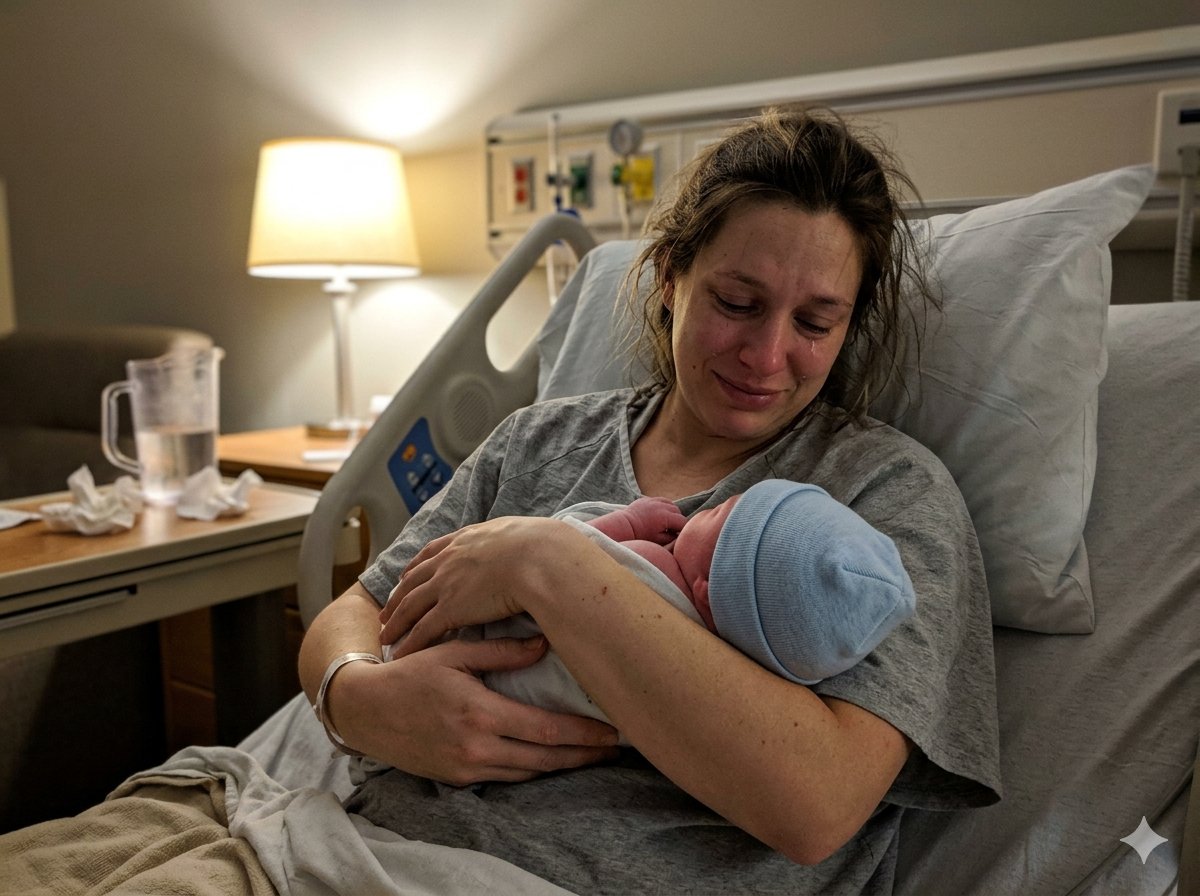
There is something completely singular about those very first hours. Your baby is still curled up just as they were inside you, fists clenched, nose turned up, that way they have of frowning when light surprises them. This moment lasts so little time. After 48 hours, after a week, your baby has already changed. These first birth photographs capture a version of your child you will never see again.
And then there's you. Exhausted, but glowing in a way you didn't know was possible. That mixture of tiredness and absolute happiness on your face, it's something your children will want to see one day, something your grandchildren will search for in the albums. Birth photos at hospital are not vanity: they are your family's history beginning right there, in that room.
According to the Office for National Statistics, there were 594,677 live births in England and Wales in 2024, the first rise since 2021. Every one of those births was a unique, unrepeatable moment.
Concretely, you have three options for capturing these instants:
- A birth photographer present in the delivery room, during or immediately after the birth
- A photography service offered by some NHS and private hospitals, typically the day after
- Your own photos, taken on a smartphone or camera, guided by a few simple principles
Each option has its advantages, and its realities to know before you decide.
Hiring a birth photographer for the delivery room
A birth photographer, sometimes called a labour photographer, is a professional who is with you during labour and/or immediately after, to capture those raw and real moments that a hospital photography service can never truly reach. It's a different approach, more immersive, often deeply emotional.
Is it permitted in UK hospitals?
The honest answer: it depends on the hospital. There is no single national rule in the UK governing whether a professional photographer may be present in a delivery room. Each NHS Trust and private hospital sets its own policy.
What the evidence shows:
- Some hospitals allow a professional photographer, subject to conditions: agreement from the midwifery team, not interfering with medical staff, using only available light without flash
- Others discourage or prohibit professional photography in the delivery suite, this varies significantly between NHS Trusts. Birmingham Women's and Children's NHS Trust, for instance, requires advance approval from their Communications team, written parental consent, and a Trust staff member accompanying all professional photography at all times
- As University Hospital Southampton's clinical law guidance confirms, NHS hospitals are legally entitled to explicitly prohibit photography on their premises, typically to protect other patients' privacy and staff working conditions
- Many hospitals ask that you always seek explicit permission from the midwife or consultant before any filming or photography during labour
- For your specific hospital, whether NHS or private, contact the maternity unit directly, ideally from around week 28 of pregnancy
The right approach: Contact your maternity unit as early as possible, request their policy in writing, and if photography is permitted, your photographer should introduce themselves to the team in advance and be fully prepared to step outside if the situation requires it. Good birth photographers understand this without being told, it's built into how they work.
Birth photography is most straightforwardly possible when the pregnancy is low-risk and the medical team has explicitly agreed. In the case of an emergency or unexpected intervention, the photographer must be ready to leave immediately. Any reputable birth photographer will have discussed this scenario with you beforehand.
How it works in practice
A birth photographer in the delivery room doesn't arrive with a tripod and studio lights, quite the opposite. They work discreetly, with a fast, quiet lens, never placing themselves between you and the medical team. Their role is to be present without being felt.
In practice, here is how it typically unfolds:
- Before the birth: A meeting with the photographer to set your expectations, discuss what you do and don't want captured, and confirm authorisation from your maternity unit
- During labour: The photographer can be present from the start, or only arrive when birth is imminent, agreed with you in advance according to your preferences
- The birth and immediately after: First cries, skin-to-skin contact, the first feed, the faces of your loved ones, captured as they happen, with no staging
- The delivery: Typically a few weeks later, a private online gallery of edited photographs, usually 50 to 150 images depending on the duration and package
These sessions are intense, emotionally charged, for you and for the photographer. That's why it matters to choose someone you genuinely trust, someone you feel at ease with from the very first conversation. Look at portfolios carefully, read testimonials, and meet them in person before the birth.
Hospital photos the day after
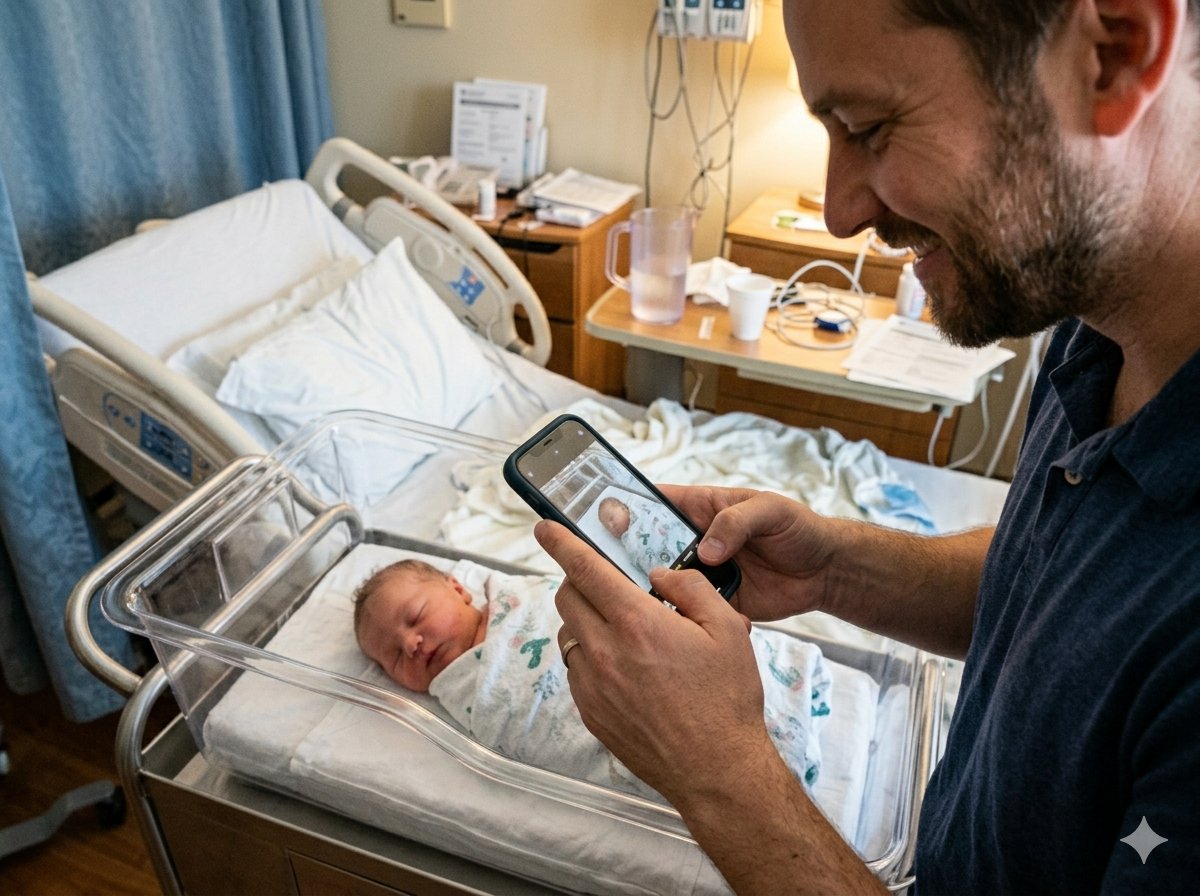
If a delivery room photographer feels too intense, or your hospital simply doesn't allow it, there is another very common option: a photo session at the hospital, in your room, the day or two after the birth.
Hospital photographer vs independent photographer
Two very different experiences, and it's worth understanding the distinction before you decide.
| Factor | Hospital photography service | Independent photographer |
|---|---|---|
| Timing | 24–48h after the birth, during your stay | At your request, during or after your stay |
| Duration | Typically 10–20 minutes | 1–2 hours depending on package |
| Personalisation | Limited, standard poses, often white background | High, tailored to your family and wishes |
| Convenience | Very convenient, comes to you | Requires light organisation |
| Pricing transparency | Sometimes unclear, selling on the ward while emotions run high | Clear pricing agreed in advance |
| Family included | Rarely | Yes, on request |
The hospital photography service has real value: it's there, requiring no organisation from you, in the most precious hours. But be aware of sometimes aggressive commercial practices, some agencies partnered with maternity units charge very high prices, with products sold directly on the ward while you are still in the thick of the emotion. Citizens Advice and Trading Standards remind consumers that any service provider must give clear pricing upfront; if you believe you've experienced unfair practices, you can report the trader through their respective platforms. Under the Consumer Rights Act 2015, you are entitled to transparent pricing before committing.
An independent photographer you have chosen, met, and agreed pricing and expectations with in advance, that is usually a far more relaxed experience. And if your hospital permits it, this photographer can come to your room during your stay.
To go deeper on choosing the right professional, our guide to choosing a baby photographer in the UK covers every criterion to check. And if you're also planning a maternity shoot before the birth, our maternity photoshoot guide explains how to prepare for a session you'll be proud of.
Prices and what's included
Prices vary considerably depending on the option. Here is what the UK market shows in 2026:
- Hospital photography service (where offered): Basic packages typically start around £80–£120 for a small set of 5–6 images. Full packages with prints and digital files can reach £400–£700 or more at private hospitals, the Lindo Wing at Imperial College Healthcare is one example of a premium private maternity photography service
- Independent photographer at the hospital (Fresh-48 style): Generally £200–£500 for a session in your room, for instance, London-based Jess Morgan Photography charges a £250 booking fee with digital collections from £490. London-based photographers typically charge 30–40% more than the rest of England
- Newborn studio session (5–15 days after): £250–£600, for example, Karen Wiltshire Photography (Dorset) offers packages from £299 (5 digital images) to £499 (30 images + prints + wall art credit). Often a complement or alternative to the hospital session, in more controlled and relaxed conditions
What is rarely included in the base price: prints, albums, framed images. Always check exactly what a package covers before agreeing. For a full pricing breakdown by session type, see our complete baby photographer cost guide for the UK.
Taking your own photos at hospital: practical tips
No photographer booked? No problem. Your phone can capture genuinely beautiful moments if you know what to look for, and what to avoid. These tips apply equally if you have a camera but no professional photographer.
Light, angles, and the moments to capture
Natural light is your best friend. Switch off the overhead fluorescent lights in the room and move towards the window. Soft, side light, no direct sun, is enough to create beautiful images even with a recent smartphone. If it's night-time, avoid direct flash (it hardens faces and startles babies) and find the softest available light instead.
The angles that make all the difference:
- Gentle overhead shot: photograph your baby from slightly above, face-on, their features come to life and their face is fully visible
- The profile: baby from the side, showing their nose, eyelashes, the curve of their head, simple and timeless
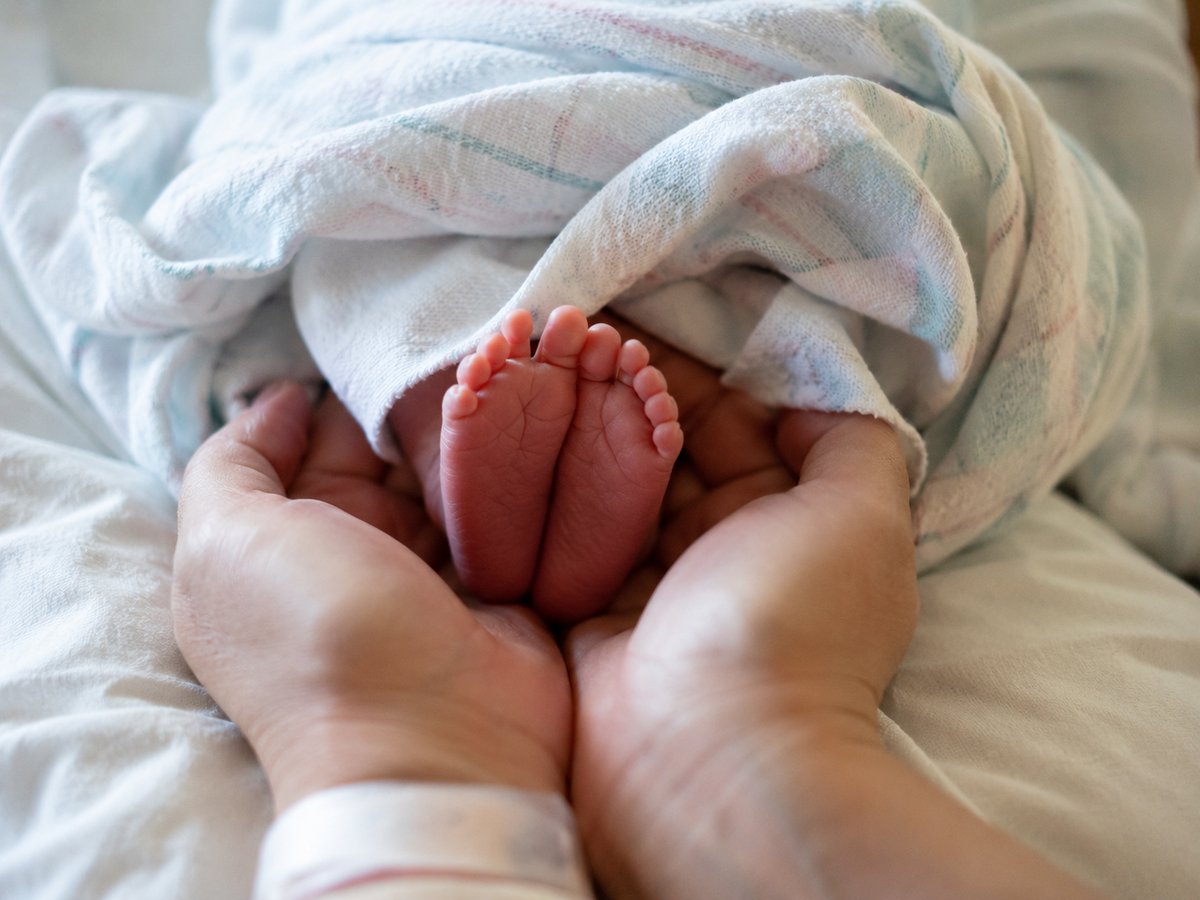
- The details: their hands, feet, tiny fingers curled against your hand, zoom into the small details; that's where the magic of these first days lives
- The first look: that first gaze exchanged between you and your baby, even blurry, even imperfect, it's often the photograph you'll treasure most
Moments you won't want to miss:
- Skin-to-skin contact immediately after the birth
- The first feed
- Your partner holding the baby for the first time
- Older siblings visiting at the hospital
- Grandparents meeting their grandchild for the first time
- Your baby sleeping, curled up, brand new
A few simple habits: take plenty of shots, you'll edit later. Silence the shutter sound if your baby has finally fallen asleep. And don't be afraid to put the phone down sometimes and simply live the moment, some memories don't need a photograph.
If you'd like to carry the experience on a few days after coming home, discover what a well-prepared newborn photoshoot can offer, in a studio or at home, in more settled conditions. And for everything that's possible to capture at every age during your baby's first year, our guide to baby photography by age will give you ideas at exactly the right time.
Finding a birth photographer in the UK
If you've decided to hire a professional for your hospital birth photography, whether for the delivery room or your ward, here is how to find the right person.
The criteria that truly matter:
- A birth portfolio specifically, not just newborn studio work. The two require very different skills
- Experience in a hospital setting: the photographer must understand how to work alongside medical staff and when to step back
- On-call availability: babies don't arrive on schedule, your photographer must be reachable and mobile at any hour
- Transparent pricing stated clearly before any agreement is signed
- A pre-birth meeting: you must feel comfortable with this person. They will be present at one of the most intimate moments of your life
Specialist birth photographers work across all parts of the UK, London, Manchester, Birmingham, Leeds, Bristol, Glasgow, and beyond. Word of mouth remains the strongest recommendation, but a specialist directory allows you to compare portfolios, styles, and coverage areas far more easily.
For general guidance on patient rights during birth, the NCT (National Childbirth Trust) publishes resources on parents' rights during labour and birth in the UK. Note that NHS trusts have individual photography policies: for example, Birmingham Women's and Children's NHS Trust requires written parental consent and Communications team approval for any professional photography, a process that must be arranged well in advance. As University Hospital Southampton's clinical law guidance notes, hospitals are legally entitled to restrict or prohibit photography on their premises to protect patient confidentiality, which is why contacting your specific maternity unit in writing from around week 28 of pregnancy is the only reliable approach.
If you'd like to understand whether your photographer holds relevant professional insurance and training, the British Institute of Professional Photography (BIPP) maintains a register of accredited members.
Find your birth photographer in the UK
Specialist birth and newborn photographers across England, Scotland, and Wales. Compare portfolios, coverage areas, and pricing.
See birth photographers near you →Frequently asked questions
Can a professional photographer be present in the delivery room in the UK?
Yes, in some hospitals, but not all. There is no single national rule. Each NHS Trust and private maternity unit has its own policy regarding professional photographers in the delivery suite. Contact your maternity unit directly from around week 28 of pregnancy, and ask for their position in writing if possible.
What is the difference between a birth photographer and a newborn photographer?
A birth photographer accompanies the labour and the very first hours, it's a documentary, emotional approach, usually in a hospital setting. A newborn photographer works in the first 5–15 days after birth, usually in a studio, with more carefully composed poses in a fully controlled environment. The two approaches complement each other perfectly. For more on the newborn session, see our complete newborn photoshoot guide.
How much does a hospital birth photo session cost in the UK?
Hospital-run photography services (where offered) typically start around £80–£120 for a small set of images, rising to £400–£700+ for premium packages at private hospitals such as the Lindo Wing. An independent photographer you commission for a Fresh-48 or in-room session generally costs £200–£500, with digital files usually included (for instance, Jess Morgan Photography in London charges a £250 booking fee, digital collections from £490). Always check what the price covers, prints and albums are almost always extra. Our cost guide breaks this down in full.
Can I take photos at the hospital with my phone?
Yes, in your own room, for your personal memories, this is generally acceptable everywhere. Restrictions apply mainly to the delivery room (where the midwifery team's agreement is required) and to photographing other patients or staff without their consent. Privacy protections apply to everyone within a hospital.
When should I book a birth photographer?
As early as possible, ideally from month 5 or 6 of pregnancy. Good birth photographers are often booked months in advance, and because babies arrive when they choose, these photographers typically work on an on-call basis. The earlier you book, the more choice you have.
Are birth photos at hospital really worth it?
This is a deeply personal question. What many parents say is that they regret not having had them, rarely the reverse. These photographs capture a moment you will never experience again in quite this way. Even imperfect, even taken on a phone, they carry a weight that grows with time, particularly when your child is older and wants to know what they looked like the day they were born.
These first moments deserve to be kept
There is no right or wrong approach here. Whether you choose a professional birth photographer in the delivery room, the hospital's own photography service the following day, or simply your phone on the bedside table, what matters is that these moments exist somewhere. That in twenty years, your child can leaf through these images and see the world as it was on the day everything began.
If you're still deciding which approach suits you best, our guide to choosing a baby photographer in the UK will help you think it through. And if the idea of a beautiful session back at home in the days after appeals to you, a newborn studio session in the first two weeks offers the perfect setting for calm, considered photographs.
Find a birth photographer in the UK
Browse our directory of specialist birth and newborn photographers across England, Scotland, and Wales.
See all baby photographers →Related articles
- Newborn Photoshoot: The Complete Guide for New Parents
- How to Choose a Baby Photographer in the UK, 2026 Guide
- Baby Photographer Cost UK 2026: Prices by Session Type
- Pregnancy Photoshoot: Everything You Need to Know
- Baby Photoshoot by Age: Complete Guide from 0 to 12 Months
- Gifting a Baby Photoshoot: the newborn gift that truly touches new parents

