
The essentials at a glance
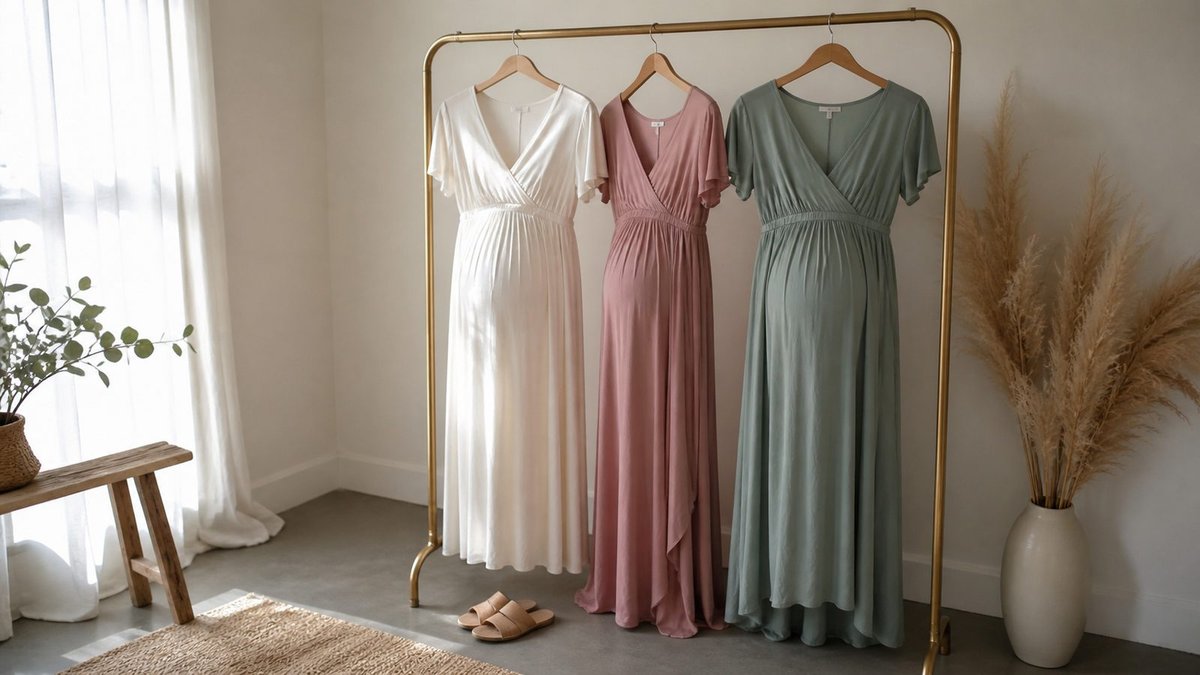
- A long, flowy dress in a soft neutral, cream, sage, dusty rose, is the single most reliable outfit choice for any bump shape
- Avoid jet black and bold prints: they swallow the bump and date badly in a few years
- For couples: harmonise your colours, don't match them. Complementary tones beat the "twinning" look every time
- Profile poses are your best friend: they tell the whole story of the bump without you needing to do anything dramatic
- Bring two outfits, not four, changing too often eats into your shoot time and wears you out
You've booked your maternity photoshoot, the date is circled in the diary, and now comes the question that seems to cause more stress than the shoot itself: what on earth do I wear? This guide is all about maternity outfits and poses, and right after the wardrobe panic comes: will I know what to do with my hands? Everyone asks this. Every single person who has ever stood in front of a camera at eight months pregnant has had exactly this panic, and most of them came out the other side with photos they absolutely love. Precious memories of the time just before your little one arrived. Find a maternity photographer in London in our directory.
This guide covers the practical stuff: outfits, colours, poses for solo shots, couple shots, and getting the siblings involved without it turning into a disaster. For everything around timing and general shoot preparation, head to our complete maternity photoshoot guide. And if you're still searching for the right photographer, our article on finding a maternity photographer in England walks you through what to look for.
- What to wear for a maternity photoshoot
- Colours that work (and ones to skip)
- Dressing as a couple for your shoot
- The best maternity poses, solo and with a partner
- Including older children
- Creative ideas beyond the classic shoot
- Frequently asked questions
What to wear for a maternity photoshoot
The rule is simpler than most people expect: wear something that makes you feel like yourself, not like you're performing a version of pregnancy for an audience. Photos where the mum looks uncomfortable, physically or emotionally, read immediately on screen. Your photographer can work miracles with light and composition, but they can't magic away the tension of a dress that's digging in.
The long flowing dress: still the go-to, and for good reason
There's a reason every maternity photographer's wardrobe rack has six of these. A long, flowy dress in chiffon, viscose, or jersey does things for bump photography that almost nothing else does: it moves, it drapes, it creates shape without constriction, and it works at 28 weeks just as well as at 36. In the UK, Seraphine is the classic choice (their maxi dresses are cut specifically around the bump and come in those sage greens and soft blushes that photograph beautifully). ASOS Maternity has decent options at a lower price point, and JoJo Maman Bébé does some lovely understated styles if you want something you might actually wear again after the birth.
What works particularly well within this category:
- A deep V-neck or wrap front, draws the eye down and shows off the bump from the front
- Empire waists (cut under the bust), they elongate the silhouette and are genuinely comfortable to stand in for an hour
- Dresses with a side split, opens up the pose options enormously, especially for shots on the ground
- Anything with a slight train or extra fabric in the skirt. Outdoors especially, the movement adds life to the photos
The lingerie or draped look: more common than you'd think
This is the option that makes people hesitate, then wish they'd done it. It's not about exposing everything, it's about the light catching the curve of the bump in a way that a dress simply can't replicate. Think a lace maternity bralette with high-waisted briefs, or a length of sheer fabric draped over the shoulder and held loosely. Mamas & Papas does some lovely lace nursing sets that work brilliantly for this kind of shot.
Soft, diffused natural light hides stretch marks and skin texture in a way harsh studio lights never could. If you're nervous about this kind of shot, start in a more covered outfit, you can always decide to go more minimal during the session once you're comfortable. Around 80% of mums who start the session reluctant about the intimate option end up glad they tried it.
The casual look: jeans, a shirt, your actual life
Not every maternity shoot needs to look like a magazine spread. Some of the most memorable shots are the ones where the mum looks exactly as she would on a Sunday morning: open-front jeans with a tucked white linen shirt, a slouchy knit over leggings, a dungaree dress half-undone. These feel real, and in ten years, that realness is exactly what you'll love about them.
For the casual route, keep logos and heavy graphics out of the frame. Plain fabrics, soft textures, colours that sit within the same family, these photograph cleanly and age well.
Colours that work, and the ones to skip
Colour choices change the entire feel of a photo. The bump can disappear into dark fabric, or pop beautifully out of something pale and warm. Here's a quick reference:
| Colours that work | Why they photograph well | Best avoided |
|---|---|---|
| Ivory, cream, off-white | Luminous, flattering on all skin tones | Jet black (absorbs the bump shape), bright red, neon yellow, heavy horizontal stripes, busy prints |
| Blush, dusty rose, mauve | Soft and feminine, excellent in both studio and natural light | |
| Sand, camel, terracotta | Warm tones that complement skin and outdoor settings | |
| Sage green, soft teal | Fresh, natural, ideal for outdoor shoots in parks or countryside | |
| Dove grey, taupe | Understated and timeless, works across all seasons |
One practical tip: hold your dress up to a window and take a photo on your phone. If the fabric goes sheer in strong light, you'll want to know before the shoot. Some chiffon fabrics become much more translucent than expected under photography lighting, not necessarily a problem, but worth knowing about in advance.
And two outfits is enough. Three at most. Beyond that, the changeover time eats into your actual shooting time and you start to feel tired and rushed, which shows.
Dressing as a couple for your shoot
More and more couples choose to do the whole session together, which makes sense, this is both of your stories. But "how do we dress?" is where a lot of couples get stuck, usually ending up either too matchy-matchy or with a jarring colour clash that nobody noticed until they saw the photos.
The approach that works: same palette, different pieces. You're not going for identical, you're going for cohesive. If she's in a cream or blush dress, he works in stone chinos and a white or pale linen shirt, sleeves rolled up. If she goes for terracotta tones, he works in khaki or taupe. Nothing matchy, nothing clashing.
What to avoid for the partner: dark suits that pull attention away, bold logos, bright trainers, anything that reads as "dressed for a different event". The visual hierarchy in these shots puts the bump (and the mum) at the centre. His role in the composition is to frame and support, not compete.
Practical pairing examples
- She: cream flowing maxi → Him: pale stone chinos, white linen shirt, no tie
- She: sage green wrap dress → Him: khaki trousers, soft grey t-shirt or fine-knit jumper
- She: blush lace bralette + draped fabric → Him: well-fitted jeans, white shirt open at the collar
- She: casual jeans and a white knit → Him: similar wash jeans, plain grey or navy knit (no logos)
The best maternity poses, solo and with a partner
Your photographer will guide you through this on the day. That's their job, and the good ones are very good at it. What's useful to know beforehand is the range of poses that reliably work, partly so you can arrive with ideas, partly so nothing feels completely foreign when they ask you to shift your weight or turn three-quarters to the light.
Solo poses that flatter the bump
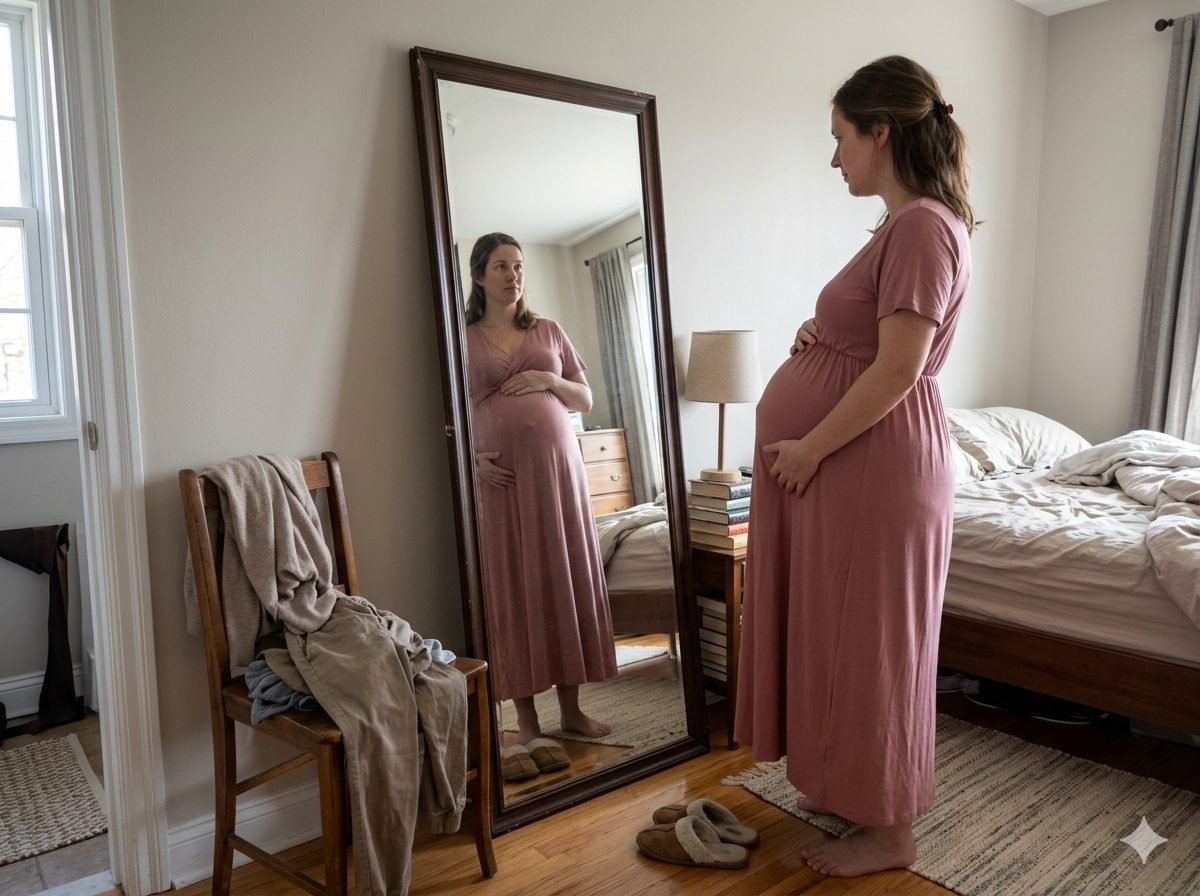
- Side profile, hands cradling the bump: the classic for a reason. It shows the full shape of the pregnancy, and almost every bump looks its best from a 90-degree angle. One hand under, one above, or both simply resting on the sides.
- Looking down at the bump: the connection this captures is hard to fake. That quiet moment of talking to the baby before they're born, it reads in the photo without any staging.
- Lying on your side: on a bed, on a blanket in the grass, on a studio floor with clean white sheets. One hand supporting your head, one on the bump. In a flowing dress this is elegant; in a lingerie set it's intimate and beautiful.
- Standing, shot from behind: the bump isn't visible here, but the silhouette, the curve of the back, the hair, the shoulders tell a different part of the story. Particularly striking with a dress that ties at the back or dips low.
- Heart hands on the bump: yes, it's been done a thousand times. It's been done a thousand times because it works. You don't have to include it, but don't dismiss it either.
Poses with your partner
The poses that land are the ones that feel like something you'd actually do with each other, not choreography. The best maternity photographers know how to get you there, a whispered instruction, a small prompt, and suddenly you're both laughing or both quiet and it's real.
- The embrace from behind: he stands behind, wraps his arms around you, hands meeting on the bump. His chin on your shoulder or forehead at the back of your head. Protective, intimate, timeless.
- Foreheads together: facing each other, foreheads touching, eyes closed or looking down. The bump is in the frame between you. Simple and very moving.
- Him kissing the bump: kneeling or crouching, lips on the bump, you looking down at him or at the camera. One of the most emotionally charged poses in the repertoire, and it's not as staged as it sounds once you're in it.
- Walking together: outdoors, hand in hand, moving away from or towards the camera. Movement breaks the stiffness that people feel in front of a lens. These walking shots are often the most spontaneous-feeling images of the entire session.
- The silhouette: in studio against a strongly backlit wall, or outdoors at golden hour. Your profiles facing each other, bump clearly visible between you. Graphically clean, emotionally powerful.
Including older children in the shoot
This is the wildcard section. Children do what children do, and in maternity photography, that's often what produces the most extraordinary shots of the entire session. The ear pressed against the bump, eyes wide open. The toddler who won't stay still but keeps gravitating back to Mum anyway. The one perfect second where everything lines up and your photographer catches it.
What actually works when bringing older children:
- Brief them, but loosely. Tell them they're going to see how big the baby has grown. Don't drill them on poses, they'll stiffen up and the spontaneity goes.
- The bump kiss: let them do it on their terms. The shy version where they lean in cautiously is just as good as the enthusiastic one.
- The ear against the bump: pure concentration on a child's face is one of the most irresistible things in photography.
- Family pile: everyone on the sofa or on a blanket, blotted together. You in the middle. Doesn't have to be formal.
Bring snacks. Seriously. A packet of raisins and a favourite small toy can save the second half of a shoot when a toddler has hit their limit. Tell your photographer the ages in advance, they'll adjust their pace accordingly.
Creative ideas beyond the classic shoot
The standard approach (flowing dress, studio or park, soft light) produces beautiful results. But if you want something that feels more specifically yours, here are directions that consistently work:
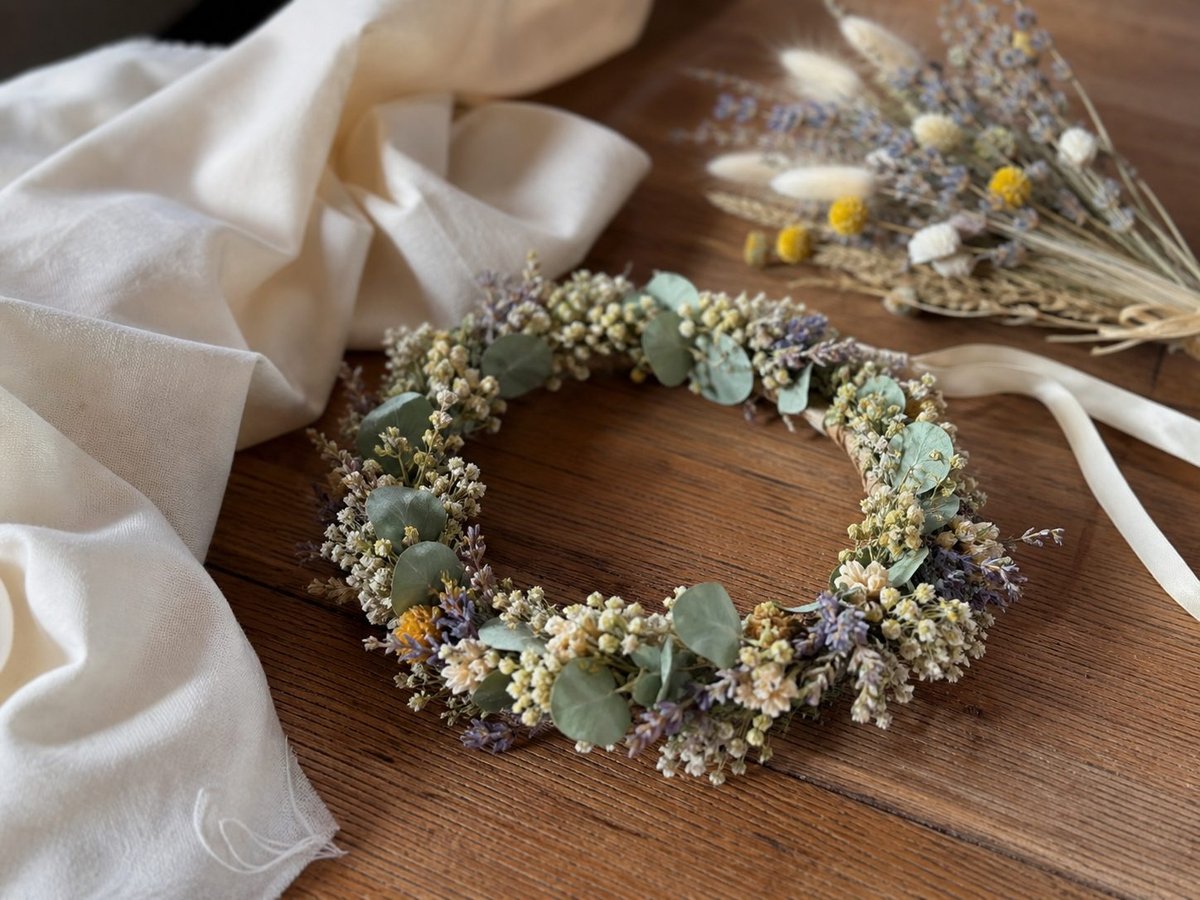
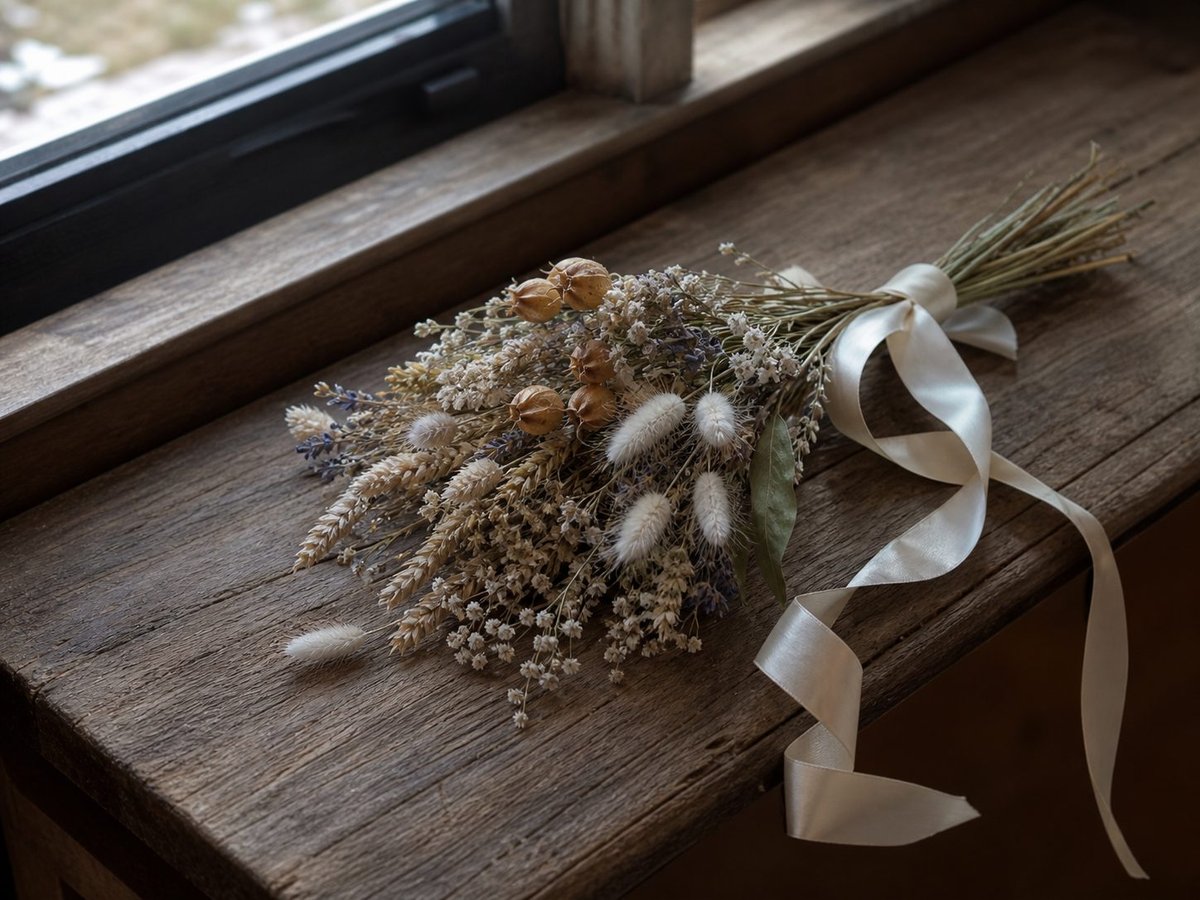
- Florals: a crown of dried flowers, a hand-tied bouquet from your local market, petals scattered on the floor. Nature and pregnancy have always looked good together. In spring and summer, shooting in a field of wildflowers or in a bluebell wood (the Chilterns, the Surrey Hills, the Yorkshire Dales all have options within an hour of most cities) produces images that feel genuinely special rather than arranged.
- At home: in the nursery you've just finished painting, in the kitchen where you've been stress-baking for months, in your bedroom at 8am in the soft morning light. These domestic shots have an intimacy no studio can replicate, and in ten years you'll love seeing what the house looked like before your child arrived and rearranged everything.
- Golden hour: the 40 minutes before sunset, outdoors, anywhere. The light does things that no amount of studio equipment can match. A simple white dress in that light looks extraordinary. Worth planning your shoot time around if your photographer is flexible.
- Something personal: your guitar, your running shoes and the park where you train, the bookshelf that means something to you. These details anchor the photos to who you actually are, not just the fact of being pregnant.
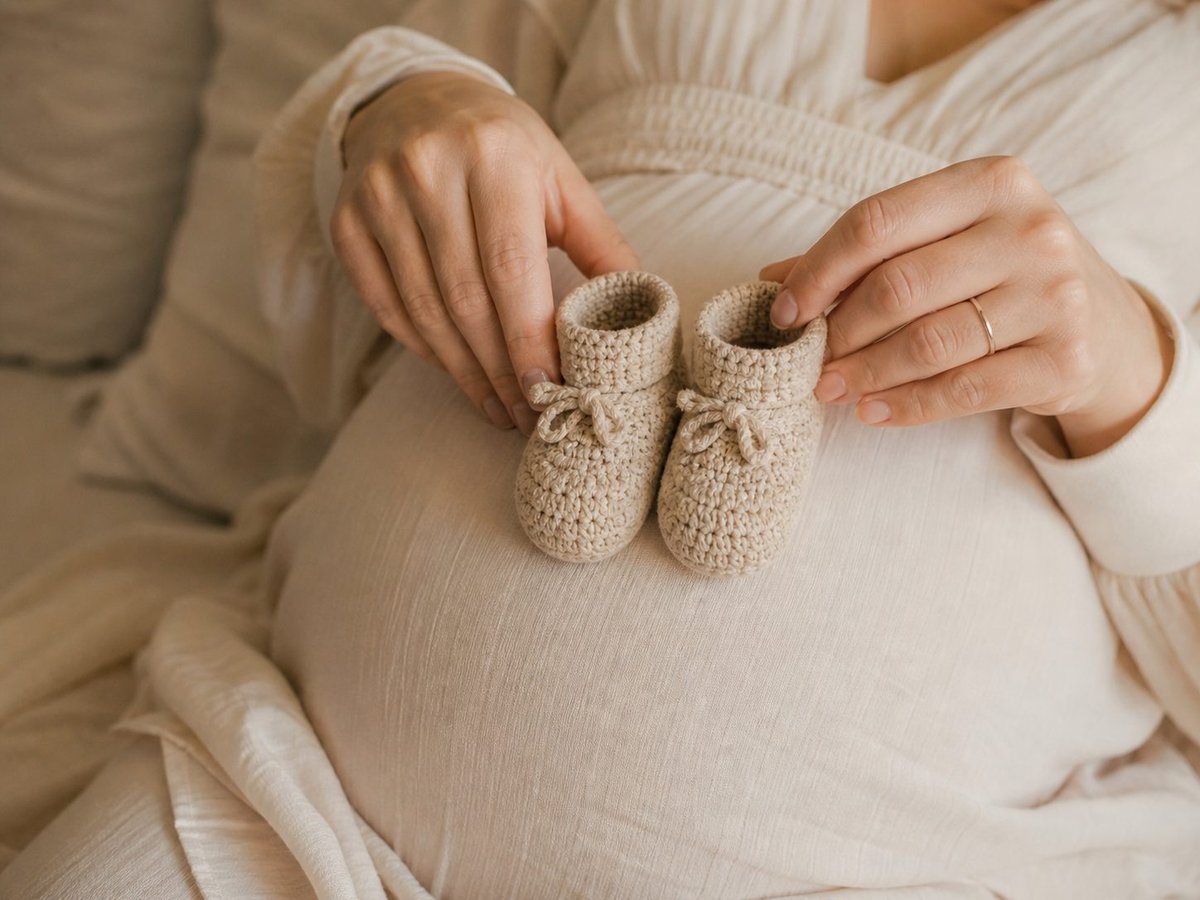
- Baby shoes on the bump: a tiny pair of shoes (or the booties your grandmother knitted) resting on the bump. A small prop, a huge emotional hit.
Whatever direction you choose: talk to your photographer before the day. The best sessions come out of a real conversation about who you are, what you love, and what you want to remember about this time. NHS guidance on pregnancy wellbeing is worth a read if you're thinking about physical comfort during the third trimester, particularly around when to schedule the shoot. A good photographer isn't just there to press a button, they're there to make it happen. Our guide on questions to ask your maternity photographer covers exactly what to discuss beforehand.
For pricing in England, typical maternity shoots run from £150 to £400+ depending on location, package, and experience level. London-based photographers tend to sit at the higher end; regional photographers in cities like Manchester, Leeds, Bristol, or Birmingham often offer comparable quality at lower rates. The team at Mother & Baby have covered maternity photography planning extensively, worth browsing for inspiration before your session. Our overview of maternity photographer costs in England has current figures by region.
Frequently asked questions
How many outfits should I bring to a maternity photoshoot?
Two is ideal, one more dressed-up option (a flowing dress, a lace set) and one casual. Three if you're doing a longer session. Beyond that, the time spent changing outweighs the variety you gain, and by outfit four you're usually exhausted and it shows. If your photographer has a wardrobe available to borrow from, you can supplement rather than bringing everything yourself.
What dress works best for a maternity photoshoot in the UK?
A long, flowing dress in a soft neutral, cream, blush, sage, stone, in chiffon or jersey. Empire waist cuts (sitting just under the bust) are particularly flattering because they skim the bump rather than pulling tight across it. UK brands like Seraphine, ASOS Maternity, and JoJo Maman Bébé all have options that work well. Avoid very stiff fabrics, they don't move or drape and look awkward in photos.
Which poses are most flattering during pregnancy?
The side profile with hands cradling the bump is almost universally flattering, it shows the bump at its best angle and is comfortable to hold. Lying on your side is the most comfortable option for longer sessions. Looking down at the bump captures genuine emotion. Trust your photographer to direct you through these, most people who arrive nervous leave amazed at how natural it felt after ten minutes.
How should the partner dress for a maternity photoshoot?
Stay within the same colour palette as the mum-to-be, complementary, not matching. Neutral tones (stone, cream, grey, soft khaki) almost always work. Avoid busy prints, logos, or anything that reads as too formal or too casual relative to her outfit. The aim is for him to frame the composition without pulling focus, the bump is the star of these photos.
What's the ideal number of weeks for a maternity shoot?
Most photographers in England recommend booking between 30 and 34 weeks. At that stage the bump has genuine presence and reads beautifully on camera, and you still have the comfort and mobility to hold poses, walk between locations, and genuinely enjoy the session. Earlier than 28 weeks the bump can look less defined; later than 36 weeks fatigue and physical discomfort start to affect the result. If you're expecting twins, bring that window forward by two to three weeks.
Can I do a maternity photoshoot at home?
Absolutely, and the results are often more intimate than studio shots. Your bedroom in morning light, the nursery, the kitchen. These are the spaces your child will grow up in, and there's something genuinely moving about photos set in the real context of your life. You'll want a photographer experienced in natural light work rather than someone who relies heavily on studio equipment. Some photographers specialise in lifestyle home sessions, ask specifically when you're enquiring.
What should I avoid wearing to a maternity photoshoot?
Jet black clothing (it absorbs the bump shape rather than showing it), bold horizontal stripes, very busy prints, anything with large logos or text, stiff fabrics that don't drape or move. Also worth avoiding: anything that requires constant adjusting, shoes you can't actually stand in for an hour, and jewellery that jangles loudly on video if your photographer also shoots any moving footage.
Ready to book your shoot?
These photos will exist for the rest of your life. Your child will look at them. You'll look at them at 3am during a feed in week three and feel something complicated and wonderful. They're worth the preparation, and honestly, the preparation is simpler than it feels right now.
Choose two outfits you feel good in. Think about the setting. Have a conversation with your photographer beforehand about what you want it to feel like. The rest happens in the room, with someone who does this for a living and knows exactly how to make a bump look its best.
If you haven't booked yet, our guide on finding a maternity photographer in England covers how to vet portfolios, what questions to ask, and what a typical session costs. And when you're thinking ahead to the newborn stage, our newborn photoshoot guide explains the ideal window and what to expect from those first sessions.
Sources: NHS, Pregnancy | Mother & Baby

